Sunday, February 01, 2015

Climate Change: Bottom Line.


                                                  Comments due by Feb. 8, 2015

It was 8 degrees in Minneapolis on a recent January day, and out on Interstate 394, snow whipped against the windshields of drivers on their morning commutes. But inside the offices of Cargill, the food conglomerate, Greg Page, the company’s executive chairman, felt compelled to talk about global warming. “It would be irresponsible not to contemplate it,” Mr. Page said, bundled up in a wool sport coat layered over a zip­up sweater. “I’m 63 years old, and I’ve grown up in the upper latitudes. I’ve seen too much change to presume we might not get more.” Mr. Page is not a typical environmental activist. He says he doesn’t know — or particularly care — whether human activity causes climate change. He doesn’t give much serious thought to apocalyptic predictions of unbearably hot summers and endless storms. But over the last nine months, he has lobbied members of Congress and urged farmers to take climate change seriously. He says that over the next 50 years, if nothing is done, crop yields in many states will most likely fall, the costs of cooling chicken farms will rise and floods will more frequently swamp the railroads that transport food in the United States. He wants American agribusiness to be ready. Mr. Page is a member of the Risky Business Project, an unusual collection of business and policy leaders determined to prepare American companies for climate change. It’s a prestigious club, counting a former senator, five former White House cabinet members, two former mayors and two billionaires in the group. The 10 men and women who serve on the governing committee don’t agree on much. Some are Democrats, some Republicans. Even when it comes to dealing with climate change, they have very different perspectives. Some advocate a national carbon tax, some want to mandate companies to disclose their climate risks. Mr. Page suggests that the world may be able to get by without any mandatory rules at all. Some members want to push investors to divest from fossil fuel companies. Several favor construction of the Keystone XL pipeline, while one member has spent more than $1 million lobbying to stop it. But they all do agree on one issue: Shifts in weather over the next few decades will most likely cost American companies hundreds of billions of dollars, and they have no choice but to adapt. The committee started in June as a way to promote a study that it commissioned, “Risky Business: The Economic Risks of Climate Change in the United States.” But it has since evolved into a loose network of missionaries who publicize the report’s ominous data far and wide, in talks at the Clinton Global Initiative conference, briefings with the American Farm Bureau Federation and breakfast meetings with local chambers of commerce. On Jan. 23, the group released the second chapter of the Risky Business project, focused on the effects on the Midwest: “Heat in the Heartland.” A report on California is next. With $1.7 million in grants from the MacArthur Foundation and others, the group is hiring a full­time staff. The group is led by three men: Tom Steyer, the hedge fund billionaire whose super PAC spent $73 million last year attacking Republicans who denied climate change and promoting awareness of the issue; Henry M. Paulson Jr., the former chief executive of Goldman Sachs and the Treasury secretary under President George W. Bush; and Michael R. Bloomberg, New York City’s former mayor and the billionaire founder of the financial information company Bloomberg L.P. Each spent $500,000 to commission the Risky Business research and each has his own particular goals for the initiative, all of which would be served by making the climate threat feel real, immediate and potentially devastating to the business world.Mr. Paulson wants companies to implement and regulators to enforce disclosure rules regarding climate risk and carbon emissions for publicly traded companies. Mr. Bloomberg views the work as a way to spur city governments and local businesses to work together on climate issues and not “kick the can down the road,” he said. Mr. Steyer sees the dollars­and­cents research as a way to neutralize conservatives’ arguments that environmental regulation always hurts business. “One side argues morality and polar bears, and the other side argues jobs,” Mr. Steyer said. “You’re never going to win with polar bears.” Embracing Adaptation To understand how the Risky Business Project came to be, it’s helpful to look at how the climate change battle has been waged over the years. In the early days, discussion was focused on fixing the problem and staving off disaster. This has been the strategy environmentalists have used to respond to all sorts of risks for years: Scientists identify the harm, publicize it, debate with the responsible industry and expect legislators to take action. The very idea of thinking about how to adapt to drastic environmental changes was basically considered taboo, an acknowledgment of defeat. “Earlier on, you wouldn’t use the ‘A’ word in polite conversation,” said Henry D. Jacoby, a professor at the Sloan School of Management at M.I.T. and a climate policy researcher — the “A” word being “adaptation.” “People thought you weren’t serious about mitigation. ‘Oh, you’re giving up.’ ” But climate change defied that playbook. There was no immediate crisis to point to — no bird eggs laced with DDT, no acid rain corroding city monuments. There was no one industry to target or overwhelming constituency to push legislators. “The rationalist, evidence­driven, faith in the political process approach to solving environmental problems has been really effective in many realms,” said Hal Harvey, who advised the Risky Business group and is chief executive of Energy Innovation, a green policy firm. “But it has done bupkis for climate change.” Indecision and indifference have prevailed instead. A majority of Americans in 2014 surveys by Pew Research and Gallup acknowledged climate change was happening, and 83 percent of Americans say that without emissions reductions, global warming will be a problem in the future, according to a January survey conducted by The New York Times, Stanford University and the environmental group Resources for the Future. But in survey after survey, those same Americans rank climate change at or near the bottom of pressing issues, far behind jobs, the economy and health care. In the meantime, powerful lobbies, including fossil fuel groups, the U. S. Chamber of Commerce and the National Association of Manufacturers, stand in the way of regulation. Climate change has become a partisan issue — a cause for conservatives who fear government overreach. It was in this context that in November 2012, Mr. Steyer convened a meeting at his Pescadero, Calif., ranch. The month before, he had stepped down from running his hedge fund, Farallon Capital Management, to devote himself to the environment. He wanted to devise a way to fight climate change more effectively, and he had assembled some highly regarded thinkers to help him brainstorm. Attendees included the environmentalists Bill McKibben and Mr. Harvey, and the political strategists John D. Podesta and Chris Lehane. As cattle grazed on native grasses outside, and a water­filtering ecosculpture burbled on the patio, the participants tossed ideas around the kitchen table. Mr. McKibben discussed his fossil fuel divestment campaign. Others suggested stoking a social media groundswell. One suggested making life hard for climate change­denying politicians (the latter idea became the basis for Mr. Steyer’s super PAC, NextGen Climate Action). While Mr. Steyer was devising his political strategy, the staff at Next Generation, his nonprofit group, were at work trying to solve another critical question: How do you make climate change feel real and immediate for people? Kate Gordon, senior vice president of Next Generation, Mr. Steyer’s nonprofit, whose mission focuses on climate change and improving the economic prospects of families, found inspiration in a British report called the Stern Review, published in 2006. It was an economic analysis, sponsored by the British government, which examined all the costs of climate change, eventually concluding that the price of curbing global warming paled compared with the costs of doing nothing. Ms. Gordon pitched Mr. Steyer on an American version — what would become the Risky Business report. It would be a way to discuss in a practical, dollars­and­cents way how businesses would have to adapt to climate change, while also making a clear case for taking action to mitigate the coming environmental crises. He liked what he heard. The team wanted to bulletproof the report, so that public discussion would not become a politicized debate about their methods or their messengers. So they contracted an economic research firm, the Rhodium Group. They also reached out to Mr. Paulson, a Republican, and Mr. Bloomberg, an independent, to see if they would co­sponsor the study and help form a bipartisan committee. Both agreed, and over the following summer and fall, the three enlisted other leaders through their personal networks. Mr. Paulson called Mr. Page, whom he knew from the Latin America Conservation Council. Through a contact of Ms. Gordon’s, they signed up Henry G. Cisneros, the former housing and urban development secretary under President Bill Clinton and now a real estate developer. Mr. Steyer called Robert E. Rubin, the former secretary of the Treasury under President Clinton and a longtime friend and mentor from their days at Goldman Sachs. For some, like Mr. Cisneros, it was the first public involvement with climate change. For Mr. Rubin, it marked a change in perspective. During his time in the Clinton administration, the Treasury Department argued the aggressive emissions reductions proposed in the Kyoto Protocol would harm the economy. Mr. Rubin wouldn’t make that argument now. “I think it’s the existential threat of our day,” he said. “Once you see it as having catastrophic impact, any economic argument follows that, because you’re not going to have an economy.” Mr. Page’s involvement with the committee was the subject of “a fairly energetic debate” within Cargill, he said. In the end, he decided to participate because the study was an analysis of potential outcomes, not one that purported to make concrete predictions or specific policy recommendations. He also figured it would be best to be involved in any report that planned to say something about his industry, especially one with such prominent backers. He didn’t want them “using the Risky Business report to terrify the U.S. population about its food supply,” he said. Cargill “hasn’t weighed in” on the regulatory debate, Mr. Page said, because the company prefers to examine rules case by case. (“Is cap­and­trade per se bad? No. Is the way it was administered in Europe ineffective? Absolutely,” he said). Unlike other committee members, he seems to favor voluntary commitments to reduce greenhouse gases. Generally, the company is opposed to any regulation that will force it to shut plants, retire equipment or otherwise “destroy fixed capital,” he said. In May 2014, the committee members gathered at the Bloomberg Philanthropies offices in Manhattan to hear two of the authors commissioned by the Rhodium Group — Robert E. Kopp, a climate scientist at Rutgers University, and Solomon M. Hsiang, an economic policy researcher at the University of California, Berkeley — present their findings. Among their conclusions if the status quo persisted: Climate change would increase energy demand in Texas by between 3.4 and 9.2 percent by midcentury. Crop yields in Missouri and Illinois would face a 15 percent decline over the next 25 years. And in the Northeast, annual property damage from severe storms — from hurricanes to blizzards — would likely increase $11.1 billion, to a total of $15.8 billion by the end of the century. Of all the members, Mr. Rubin is most preoccupied with the so­called tail risks — low­probability events where the most damage is done. Mr. Page, on the other hand, prefers to prepare for the most likely outcomes. At the meeting in May, some of those differences were discussed. As the report was being put together, Cargill scientists had argued that the agriculture industry was well prepared to adapt to changes. Mr. Bloomberg was skeptical, Mr. Page recalled. During a break, Mr. Bloomberg took Mr. Page aside and peppered him with questions: Do these technologies exist? Or are you saying they will someday — “as in, we know there will be a cure for cancer, but we have no idea when or how?” Mr. Page said he respected Mr. Bloomberg’s diligence in seeking answers, although he maintained that adaptation was more a matter of execution for the food industry, not research and development. “But the guy’s a good reporter, let’s put it that way,” Mr. Page said. Light Touch With the Message Mr. Paulson works on the upper floors of a skyscraper in downtown Chicago, with a conference room overlooking the Chicago River. In January, the wind across it is cutting, and ice floes drift along the sides. By midcentury, if the Risky Business report is right, those ice floes will be gone. When Mr. Paulson speaks to local groups, he makes sure to bring data from the report tailored to their county. “I’m not just having an abstract conversation about climate being this big risk. I can say, ‘Let me tell you!’ ” he said, slapping the table. “Here’s what this is going to mean to you, your industry and your family. Suddenly people are interested.” Mr. Cisneros says he uses a soft touch when speaking to real estate groups, so that people don’t feel lectured to. “I say, ‘This has not been my highest priority either, but it’s got my attention, and I want to share it with you,’ ” he said. He warns audiences to budget for spiraling insurance premiums in coastal states like Florida, and to keep in mind that in droughtprone regions like California’s Central Valley, water permits may become hard to acquire. Mr. Page treads especially lightly when addressing farmers’ groups, as he says they have been conditioned to think of global warming as a liberal euphemism for more regulation. Instead of coming right at the issue, he takes a circuitous route. “I ask simple questions: ‘Would you like universities to suspend research on seeds that grow in higher temperatures? Of course not! That’s all I’m saying!’ ” he said, raising his hands defensively. “You get people to acknowledge that they, too, have anxieties. It’s a micro­acknowledgment, not a macro­acknowledgment.” Through this kind of education, several committee members hope to recruit business leaders to the side that helps, not hinders, the fight against climate change. “The whole point of all of this is that it can be mitigated,” Mr. Paulson said. “The enemies of what we’re trying to do are short­termism and a sense of hopelessness. But if we act soon we can avoid the worst outcomes and adapt.” Even so, the committee members seem to have a long road ahead of them. After meeting with Mr. Page, Jon Doggett, executive vice president of the National Corn Growers Association, said he was skeptical that the report would influence farmers much. His members need near­term incentives to cut greenhouse gases — immediate cost savings, government incentives and so forth, he said. “Are we going to reduce greenhouse gas emissions today because we believe there’s an economic benefit 15 years from now? That’s way too hypothetical for a family­owned and operated business that has to make a payment this year,” Mr. Doggett said. “The banker doesn’t get paid in hypothetical dollars.” Dale Moore, executive director of public policy for the American Farm Bureau Federation, which lobbies in Washington on behalf of farmers and ranchers, said he agreed with Mr. Page that climate seemed to be in a “more extreme cycle” and that agribusiness would do well to develop hardier seed strains. But the group’s members remain skeptical that humans cause climate change. They are part of a consortium opposing the Environmental Protection Agency’s new proposed rule limiting coal­fired power plants. But not all business groups feel this way. The Seattle Metropolitan Chamber of Commerce parted ways with the national Chamber of Commerce in 2011 specifically because the views of Seattle members on climate change differed so drastically with the sort of climate­denying statements the national group was making. “We were hosting clean technology conferences,” said Maud Daudon, president of the group, “and they were issuing statements that came from an entirely different place.” Bit by bit, the Risky Business Project’s committee members hope to turn the tide, bringing Congress around to the way that a majority of Americans feels. “We’ve made progress on things like civil rights, smoking, gay marriage and other things that seemed impossible to move when businesspeople joined the silent majority,” said Mr. Cisneros. “Congress tends not to act until the broad mainstream, including business, is aboard.” And if business feels the pain in its wallet, it will feel the heat to act, even on the coldest of days.

Friday, November 14, 2014

Is a contraceptive that costs $4-6 per annum inexpensive enough?

                                               Comments due Nov. 23, 2014

Depo-Provera, an injectable contraceptive given once every three months, is
already a popular choice of women in developing countries, who value the
convenience and discretion of not having to take a daily birth control pill.
But the injections are out of reach for many more women because they
live in rural areas that are too far from a health clinic to make the
treatments practical.

Now, a major collaboration between Pfizer, the drug’s manufacturer,
and several global aid groups is aiming to change that by providing
financing to make a new version of the drug — redesigned with developing
countries in mind — available in 69 nations throughout Africa, Asia, Latin
America and Eastern Europe.

The new product, called the Sayana Press, is a single-use syringe
designed to be portable and easy to use.

Depo-Provera is typically injected into the muscle by health care
workers who must first draw the drug into a syringe from a glass vial. The
new product has been reformulated into a lower dose and uses an existing
device, called a Uniject system, that looks like a plastic bubble with a short
needle attached. It is injected under the skin by squeezing the bubble and
can be administered with minimal training.

“You can imagine somebody sticking this in their satchel and going into
a very remote area,” said Peter Stevenson, vice president for portfolio
management at Pfizer’s Global Established Pharmaceuticals.

The product is already being used in several African countries, but
Pfizer said it planned to expand distribution through a financial partnership
that would allow the product, which typically costs about $1.50 a dose, to be
sold to health care institutions in those countries for about $1.

Several groups, including the Bill and Melinda Gates Foundation and
the Children’s Investment Fund Foundation, as well as the United States
Agency for International Development, will help subsidize the cost and
assist in introducing it in countries around the globe.

Women will most likely receive the product free or at a reduced cost.
Chris Elias, president for global development at the Bill and Melinda
Gates Foundation, said the Sayana Press could be an important new choice
for the estimated 225 million women worldwide who would like access to
contraception but do not have it. “Family planning is an important priority
for us, and this is expanding the range of methods,” he said.

Pfizer declined to comment on the revenue it expected to generate from
sales of the Sayana Press, but John Young, president of Pfizer’s Global
Established Pharmaceuticals, said it was not seen as a major revenue driver
for the company. Depo-Provera sells to health institutions in those countries
for about 75 cents a dose.

Dr. Amitasrigowri S. Murthy, an assistant professor at NYU Langone
Medical Center in the department of obstetrics and gynecology, did not
work on the project but said the Sayana Press carried advantages because
injecting Depo-Provera into muscle requires the skills of a knowledgeable
health care worker. With the new product, “you press it and it injects it,” she
said. “It’s similar to insulin.”

Fiona Walugembe, who is overseeing the introduction of the Sayana
Press in Uganda through the global health group PATH, said women were
eager to hear about the new product. About a third of Ugandan women have
no access to family planning options, she said.

She said many women like Depo-Provera because they do not have to
tell their husbands that they are using a contraceptive.
Now, they will not have to make a long trip four times a year to receive
the injections.
“It is exciting,” she said. “It is really a big thing.”
NYT 11/14/2014)

Friday, November 07, 2014

New Mechanism Behind Arctic Warming Revealed

                                     Comments due Nov. 16, 2014

We all know that greenhouse gases contribute to global warming, but new research identifies a new mechanism that could turn out to be a major contributor to melting sea ice, specifically in the Arctic region.
Scientists from the US Department of Energy’s Lawrence Berkeley National Laboratory (Berkeley Lab) have studied a long-wavelength region of the electromagnetic spectrum called far infrared. Far infrared is a region in the infrared spectrum of electromagnetic radiation. While it is invisible to our eyes, it accounts for about half the energy emitted by the Earth’s surface.
Despite its importance in the planet’s energy budget, it’s difficult to measure a surface’s effectiveness in emitting far-infrared energy. In addition, its influence on the planet’s climate is not well represented in climate models.
Current models assume that all surfaces are 100 percent efficient in emitting far-infrared energy. However, scientists found that open oceans are much less efficient than sea ice when it comes to emitting in the far-infrared region of the spectrum. This means that the Arctic Ocean traps much of the energy in far-infrared radiation, a previously unknown phenomenon that is likely contributing to the warming of the polar climate.
“Far-infrared surface emissivity is an unexplored topic, but it deserves more attention. Our research found that non-frozen surfaces are poor emitters compared to frozen surfaces. And this discrepancy has a much bigger impact on the polar climate than today’s models indicate,” says Daniel Feldman, a scientist in Berkeley Lab’s Earth Sciences Division and lead author of the paper.
Simulations conducted by the researchers revealed that far-infrared surface emissions have the biggest impact on the climates of arid high-latitude and high-altitude regions.
In the Arctic, the simulations found that open oceans hold more far-infrared energy than sea ice, resulting in warmer oceans, melting sea ice, and a 2-degree Celsius increase in the polar climate after only a 25-year run.
This could help explain why polar warming is most pronounced during the three-month winter when there is no sun.
“The Earth continues to emit energy in the far infrared during the polar winter,” Feldman says. “And because ocean surfaces trap this energy, the system is warmer throughout the year as opposed to only when the sun is out.”
Their research appears this week in the online early edition of the Proceedings of the National Academy of Sciences.

Saturday, November 01, 2014

European Initiatives on Climate Change


                                                     Comments due by Nov. 9, 2014

BLISS was it in that pre-Lehman dawn to be alive. But to be European was very heaven. Before
the world economy turned turtle in 2008, the European Union presented an attractive face to
the world. Its scepticism about military force and love of global rules was a welcome counterweight
to the cowboy unilateralism of George Bush’s America. The issue of climate change presented a
golden opportunity for Europe to flex its soft power, economic muscle and high-minded
internationalism for the good of mankind. Perhaps, mused some, the EU should rebrand itself
the “Environmental Union.”

The crash, and the devastation unleashed across the euro zone, put paid to all that. But the
environment is back. At their most recent summit, on October 23rd and 24th, Europe’s heads of
government agreed on a climate and energy package that obliges the EU to ensure that by 2030
its emissions of greenhouse gases will be at least 40% lower than in 1990. To achieve that goal,
each of the 28 members will have to meet its own legally binding target (these remain to be set).
The deal succeeds an earlier one, signed in 2007, under which the EU agreed to a 20%
emissions cut by 2020. It is supposed to pave the way to a reduction worth 80-95% by 2050.
The agreement was hard-fought and complex even by EU standards. Poorer countries such as
Poland, which relies on coal for 90% of its electricity, demanded and won various sweeteners to
ease their transition to cleaner fuels. Two “sub-targets” of 27%, on the renewable share of the
energy mix and on improvements to energy efficiency, were included in the deal but have no
teeth (the renewables goal is binding only at “EU level”, which leads one to wonder if the club
will sue itself should it be missed). Spain and Portugal secured commitments to let them export
surplus energy over the Pyrenees into France. An accommodation was even found for Ireland’s
methane-belching cows.

It is not enough, growled the green lobbyists. They fumed that the targets will leave too much to
do to meet the 2050 goal, because later cuts will be much harder to make than earlier ones. A
more ambitious deal was probably politically impossible. But such complaints obscure the
deeper truth: that Europe is on its way to becoming an emissions pygmy. In 2012 the EU
accounted for only 11% of global greenhouse-gas emissions, next to 16% for the United States
and 29% for China. And that number will continue to shrink as Europe’s economy declines
relative to the rest of the world.

Developing countries argue that Europe has historical responsibilities to discharge, given the
cumulative heat-trapping effect of its emissions over the centuries. Fair enough. But one reason
why officials were so keen to strike a deal now is that on the climate (if on little else), the
European example—they believe—can still inspire others. They hope that at a conference in
Paris in December 2015, world leaders will be ready to sign a climate-change compact to govern
emissions after 2020, having failed to do so in Copenhagen five years ago.
Indeed, in the run-up to last week’s meeting, officials wove a happy fable in which the EU deal
would trigger movement in America, which in turn would inspire China. An “at least”
formulation was attached to the 40% goal, enabling the EU to ratchet up its contribution if
others show similar ambition.

Nor is Europe’s influence confined to the “soft” realm of cajoling and persuasion. Officials in
California, for example, made several fact-finding visits to Brussels to investigate the EU’s
emissions-trading regime when preparing their own, the world’s second-largest (it has since
been extended to Quebec). Before its launch two years ago the Californians told sceptics that
they had learned important lessons from the European example—even if these were largely
about what to avoid.

Like so many predecessors, the Paris conference will be billed as the world’s last chance to avoid
calamitous climate change. This time, developments elsewhere may offer slightly more
justification for the wilder hopes of European officials, especially when compared with 2007.
Barack Obama, who has been flexing his regulatory muscles at home, has an eye on his
environmental legacy, even if a Republican-controlled Congress will do its best to thwart him.
The Chinese have hinted they may offer a date by when their carbon emissions will peak.
So the power of the European example may not be a complete figment of officials’ imagination.
But its power is waning. Already relatively green, the EU risks being taken for granted in global
climate negotiations; it is hard to imagine influential countries—China, say, or America—
making concessions to win the Europeans over. The emissions-trading scheme, which covers
12,000 industrial polluters and half of Europe’s total carbon emissions, is at the heart of the
EU’s plans—and it is a farce. The market is massively oversupplied with permits, which now
trade for little more than €6 ($7.60) a tonne, meaning there is little incentive to ditch dirty fuels.
Europe is actually burning more coal than ever. An Anglo-German plan to accelerate a
withdrawal of permits from the market should help, although the Poles will yet again have to be
talked round.

Although the EU will easily meet its 2020 target, that is thanks largely to its sickly economy.
Recession is no remedy for climate woes. Indeed, the green rhetoric from European officials has
lately taken a growth-friendly turn; with unemployment high and growth prospects flat, citizens
will not take kindly to energy-price rises. As they translate their climate pledges into policies,
Europe’s governments will have to tread carefully if they are to lead the world without leaving
behind their voters.

(The Economist)

Friday, October 24, 2014

Why Divest from Fossil Fuels

                     Comment by Nov. 2, 2014
Although the following note was addressed to the readers of a special magazine the message is general and applies to all.
***********************************************************

A Note from Bill McKibben to Tikkun readers, members of the Network of Spiritual Progressives, and our friends and allies

Tikkun readers don’t need my financial advice – I’m not exactly a stock market guru. Still, I did write the first book for a general audience on climate change (way back in 1989), and I did found the first big grassroots climate campaign (350.org), so perhaps I can make a few observations about why the fossil fuel divestment effort has become the fastest-growing effort of its kind in history, according to Oxford University. And about why we need your congregations, your colleges, and your cities to join in this effort.
1. The fossil fuel companies aren’t normal companies. In the last few years we’ve come to understand that they have five times as much carbon in their reserves as we can safely burn if the world is to meet its agreed climate target of limiting rises in temperature to below 2 degrees. That is to say, if they carry out their business plan, the planet tanks. There’s no longer any real dispute about this – everyone right up to the World Bank has confirmed the math.
2. What this means in turn is that if you hold these stocks you in effect are wagering that the planet will do nothing to limit climate change. If we tried as a world to meet that two-degree limit – if we followed the principles put forth by all our leading religious and scientific bodies on this issue – the value of these stocks would plummet. HSBC, the world’s second-biggest bank, found that the values of these stocks would be cut in half by effective climate action.
3. Usually, dealing with companies doing something wrong, we can apply lesser kinds of pressure: proxy voting, say, on shareholder resolutions. But in this case there’s not a flaw in the business plan that can be corrected – the flaw is the business plan. Responding to such pressure earlier this year, Exxon – richest company on earth – said it would make no adjustments and thought it was ‘highly unlikely’ that they’d be restrained from using their fuel. That is, they said they’d burn the planet, and they didn’t think anyone could stop them
4. These companies and their investors also play a crucial role in sustaining the current system. If you invest in Exxon, you’ve helped send millions to climate-denial ‘think tanks.’ If you invest in Chevron, you helped send the largest corporate campaign contribution in history, designed to make sure that climate deniers kept continued control of the Congress
5. These positions are immoral. If it’s wrong to wreck the planet, it’s wrong to profit from the wreckage. Don’t trust me – listen to Desmond Tutu, perhaps the most revered faith leader on the planet at the moment, who earlier this year sent out a clarion call for divestment, especially for those of us who take the Scriptures seriously. “It is a responsibility that begins with God commanding the first human inhabitants of the garden of Eden ‘to till and to keep it,’” he said. “To keep it; not to abuse it, not to destroy it.” If, like me, you’ve traveled to places already devastated by climate change, then you know what he means. The one big study on this subject predicts that fossil fuel will take 100 million lives by 2030.
6. Divestment is not a single easy solution to global warming. It will not bankrupt the fossil fuel companies. It will, however, begin the process of politically bankrupting them, and making it harder for them to bend Washington to their will. In May, Christiana Figueres pleaded with faith leaders in a speech in London to divest immediately. By divesting, she said, faith groups can provide a “moral compass” to the planet’s other leaders. “Leaders of faith groups, from Christians and Muslims to Hindus, Jews and Buddhists have a responsibility and an opportunity,” she said.
7. And they can fulfill that responsibility without undue financial risk. In fact, study after study has shown that if endowments had divested of fossil fuels a decade ago they would have made far better returns over the period. And investors of all stripes are now calculating the risk that comes with the ‘carbon bubble’ – all those reserves of coal, gas, and oil that can’t be burned if we’re to come to terms with climate change
8. That’s why Anglican dioceses across Australia and New Zealand have divested, and why the United Church of Christ has urged its member congregations to divest, and why an astonishing array of cities (Seattle, Providence and dozens more) and colleges (from tiny Unity College to mighty Stanford) have begun the process as well. Here is a chance for the Tikkun readership, the Network of Spiritual Progressives, and the community you represent, to show its solidarity with young people and with poor people and with the rest of Creation. I hope you take it.

Saturday, October 18, 2014

A Greenhouse of the Future


                                                   Comments due by Oct. 26, 2014
Are we grasping at straws or would the PPU, plant production unit, agricultural process prove to be significant ? One thing is clear though, if the global population is to add a  few billion more hungry mouths to the global food table then we need to find new and different ways to provide nourishment. Can we do that ?
*****************************************************************************************************

– The challenge of ensuring adequate, nutrient-rich food for an expanding global population is a daunting one, especially given constraints on key resources like water and agricultural land. As it stands, the two leading approaches to enriching and enlarging the world’s food supply are genetic engineering and industrial processing with additives and chemicals. Now, a third solution is emerging: vertical farming.
Academic studies have found that locally cultivated vertical farms – stacked greenhouses that use artificial light to grow crops – can provide considerable savings, which could then be passed along to consumers. But questions about such farms’ fundamental economics, especially for commodity crops, have persisted.
That may be about to change. About a decade ago, four Dutch engineers – three of whom were also horticultural experts – initiated the “plant paradise” project to learn how high-value herbs, vegetables, and berries (not grains or tree fruits) grow best. They studied how much light green beans need to thrive; which wavelengths produce the most delicious tomatoes; what temperatures cause basil to flourish; and which combination of nutrients creates the healthiest cauliflower. Through persistent experimentation, they began developing recipes for each kind of plant, along with a blueprint for “plant production units” (PPUs) that can provide these ideal growing conditions wherever they are installed.
The project’s potential as a scalable business was enticing, spurring the four researchers to found PlantLab in 2010. Four years later, the company employs 35 people, including a chief partnership officer who previously managed supply-chain logistics for Flora Holland, the world’s largest flower market. The founders remain the company’s only shareholders; they want to retain control of the technology, while working with partners and investors to build the operating units.
Last year, PlantLab began the construction – set to be completed next month – of a $22-million, 200,000-square-foot (18,600 square meters) headquarters, including multiple PPUs and research units, inside the shell of a retail food-distribution warehouse 60 miles south of Amsterdam.
PlantLab’s pitch is that a PPU the size of a city block and just a few stories high could produce the same volume of high-quality crops as a large farm, while consuming fewer resources. The only water that leaves a PPU does so in fruits and vegetables; there is no evaporation into the air, no runoff into the ground, and no pesticides or weeds. As a result, the PPUs consume only about 10% as much water as traditional farms.
Moreover, like 3D printing, PPUs allow production to occur locally (thereby reducing transport costs and wastage) and on demand, under controllable conditions. In other words, any kind of fruit or vegetable can be grown anywhere, year-round (with a lead time of a few weeks). PlantLab proudly shows digitally enhanced photos of the same facility in a city, on a wintry tundra, in a desert, and – highlighting the PPUs’ ostensibly vast long-term potential – on Mars.
Not only do PPUs offer major savings in terms of resources and transportation; they are also not prohibitively expensive to build. Indeed, for something like $100 million, a partner could purchase the required land and construct a 500,000-square-foot (46,450 m2) PPU, with ten growing levels about five feet apart. (Operating costs depend, of course, on local water and electricity prices.)
The resulting farm would employ about 200 people for seeding, growing, harvesting, packaging, sales, logistics, maintenance, and management. And it would supply 50,000 people with a consistently high-quality seven-ounce (198.4 grams) daily requirement of fresh herbs, vegetables, and ground fruits like berries for at least ten years – all in less space that the average multi-story parking lot.
This might sound expensive. But, at just $2,000 per person, the cost is far lower than the $8,000 the average American spends in annual health-care costs. Given that a PPU will last for at least a decade, and offer considerable health benefits to local populations, it is a small price to pay.
If, for example, the world’s vegetable supply more than doubled, fresh, healthy food would become more affordable and accessible. Perhaps demand for corn syrup and processed foods would even decline.
As it stands, the closest approximation to this approach in the United States is marijuana production. With such high-value crops, it is worth honing the details of cultivation to ensure quality and minimize resource consumption. As global water supplies become increasingly scarce, more crops will become “high-value.”
It is not clear whether PlantLab will be the leader of the PPU movement, but it is clearly an important player. If the company’s processes offer all of the benefits that it claims, I hope that its founders license their patents broadly over time.
So why aren’t there already PPUs all over the place? Simply put, businesses, like plants, take time to grow. Part of PlantLab’s new site will be dedicated to Syngenta, the Swiss agribusiness/breeding firm. PlantLab is now seeking additional partners in other markets, such as pharma, cosmetics, and food.
Funding for construction will not be the only challenge that PPUs face in getting off the ground. Traditional farmers are likely to view them as unfair competition. The same thing happened to Amazon when it threatened traditional bookstores’ business model, just as it is happening now to Uber as it challenges traditional taxi and limousine services.
But those objecting are the services’ owners, not their workers. Indeed, it seems that at least half of the Uber drivers I have met previously drove taxis. Perhaps half of vertical farms’ operators will be former farm workers, and the other half will be new to agriculture – or perhaps retired marijuana growers.

Saturday, October 11, 2014

Water Usage and the California Drought.

                                                             
                                                        Comments due by Oct. 19, 2014

That California and many other Western states are suffering of a severe drought is a major problem of concern to the residents of the affected states and to the rest of us who depend on the produce of these severely affected areas. None of this is controversial.

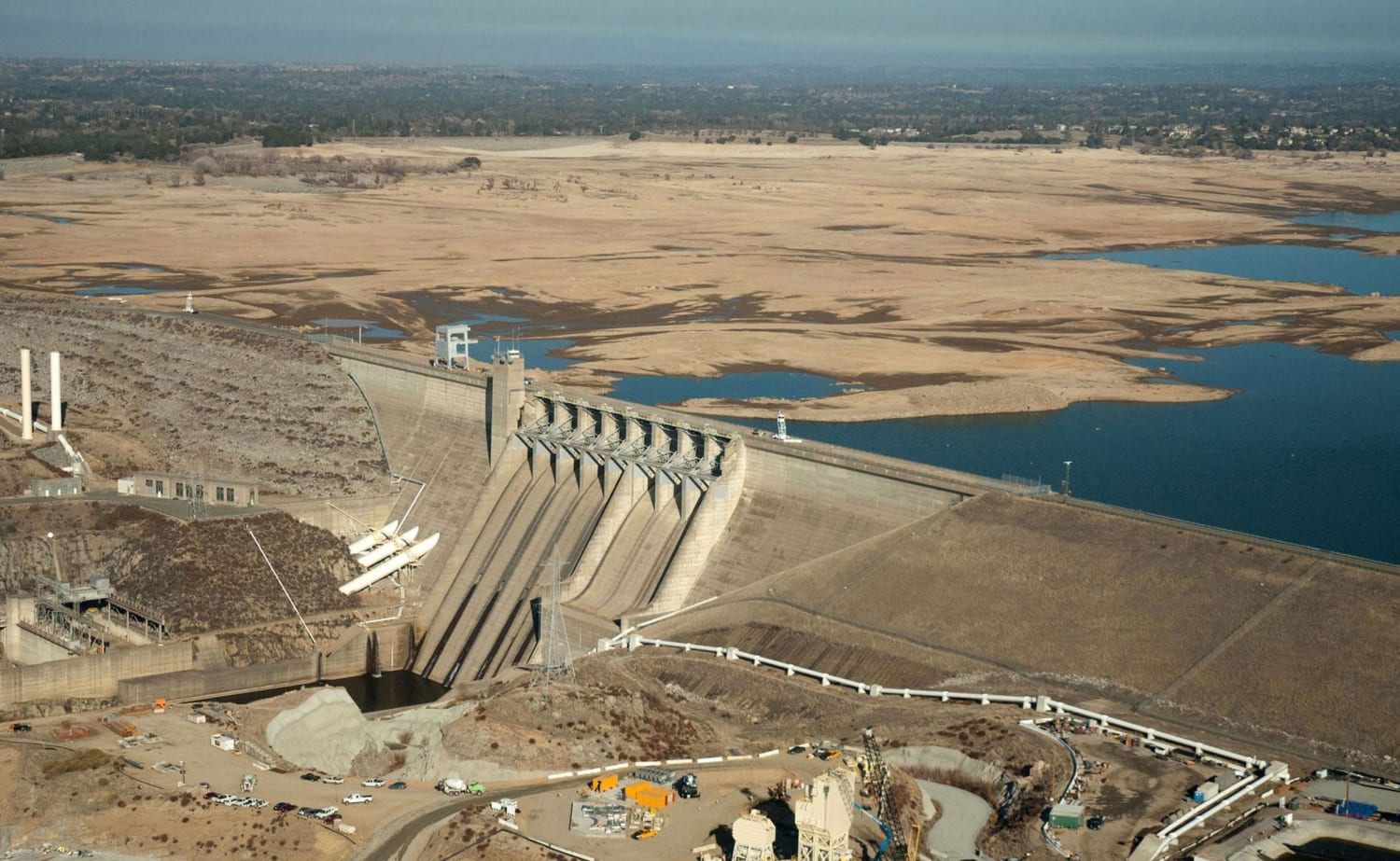
My only aim in this post is to highlight the fact that residential water conservation is to be encouraged but that its contributions in the final analysis are meager to say the least. Note that California is estimated to have at its disposal about 82 Million Acre Feet of water each year to be allocated among the various users.
Residential use, both indoors and outdoors amounts to only 5.6 MAF which is only about 7 % of the overall stock of water. The following brief news item about California touts the fact that water conservation efforts have already saved the equivalent of 27 Billion gallons. That is a fact that is not negotiable. But the real issue is how many MAF does that 27 Billion gallon represent?
You do the math: Each acre Foot is equal to 325,851 gallons. which means that 100,000 AF represents 32.5 Billion gallons. Which in essence says that all the water efforts have saved only 0.0012% of the average annual volume used by the state or a 0.0144 % if the effort is to be mainatined over a year.. Let me repeat that I am not arguing that we should not conserve but pointing out that our residential conservation efforts can never even make a dent in the problem that is facing us.

*********************************************************************************

Water conservation efforts across drought-stricken California hit a new high in August, cutting use by 11.5 percent, according to the state’s Water Resources Control Board. About 27 billion gallons of water were saved over the month of August as Californians responded to a call by Gov. Jerry Brown to cut use by 20 percent overall, with no end to the prolonged dry spell in sight. “Many more California communities are taking the drought seriously and making water conservation a priority — and residents are responding,” Felicia Marcus, State Water Board chair, said in a release. “However, while we can hope for rain, we can’t count on it, so we must keep going.” The earliest numbers for October showed nearly 60 percent of California in the highest category of drought, according to an assessmentfrom the National Drought Mitigation Center. Eighty-one percent of California is now in a state of at least “extreme drought,” the second most severe category, up from 11 percent a year ago, with a total of 37,250,000 people affected.

Saturday, October 04, 2014

Technology and Climate Negotiations


                                                   Comments due by Oct. 12, 2014

If the world is to solve the climate-change crisis, we will need a new approach. Currently, the major powers view climate change as a negotiation over who will reduce their CO2 emissions (mainly from the use of coal, oil, and gas). Each agrees to small “contributions” of emission reduction, trying to nudge the other countries to do more. The United States, for example, will “concede” a little bit of CO2 reduction if China will do the same.
For two decades, we have been trapped in this minimalist and incremental mindset, which is wrong in two key ways. First, it is not working: CO2 emissions are rising, not falling. The global oil industry is having a field day – fracking, drilling, exploring in the Arctic, gasifying coal, and building new liquefied natural gas (LNG) facilities. The world is wrecking the climate and food-supply systems at a breakneck pace.
Second, “decarbonizing” the energy system is technologically complicated. America’s real problem is not competition from China; it’s the complexity of shifting a $17.5 trillion economy from fossil fuels to low-carbon alternatives. China’s problem is not the US, but how to wean the world’s largest, or second largest economy (depending on which data are used) off its deeply entrenched dependence on coal. These are mainly engineering problems, not negotiating problems.
To be sure, both economies could decarbonize if they cut output sharply. But neither the US nor China is ready to sacrifice millions of jobs and trillions of dollars to do so. Indeed, the question is how to decarbonize while remaining economically strong. Climate negotiators cannot answer that question, but innovators like Elon Musk of Tesla, and scientists like Klaus Lackner of Columbia University, can.
Decarbonizing the world’s energy system requires preventing our production of vast and growing amounts of electricity from boosting atmospheric CO2 emissions. It also presupposes a switchover to a zero-carbon transport fleet and a lot more production per kilowatt-hour of energy.
Zero-carbon electricity is within reach. Solar and wind power can deliver that already, but not necessarily when and where needed. We need storage breakthroughs for these intermittent clean-energy sources.
Nuclear power, another important source of zero-carbon energy, will also need to play a big role in the future, implying the need to bolster public confidence in its safety. Even fossil fuels can produce zero-carbon electricity, if carbon capture and storage is used. Lackner is a world leader in new CCS strategies.
Electrification of transport is already with us, and Tesla, with its sophisticated electric vehicles, is capturing the public’s imagination and interest. Yet further technological advances are needed in order to reduce electric vehicles’ costs, increase their reliability, and extend their range. Musk, eager to spur rapid development of the vehicles, made history last week by opening Tesla’s patents for use by competitors.
Technology offers new breakthroughs in energy efficiency as well. New building designs have slashed heating and cooling costs by relying much more on insulation, natural ventilation, and solar power. Advances in nanotechnology offer the prospect of lighter construction materials that require much less energy to produce, making both buildings and vehicles far more energy efficient.
The world needs a concerted push to adopt to low-carbon electricity, not another “us-versus-them” negotiation. All countries need new, low-carbon technologies, many of which are still out of commercial reach. Climate negotiators should therefore be focusing on how to cooperate to ensure that technology breakthroughs are achieved and benefit all countries.
They should take their cue from other cases in which government, scientists, and industry teamed up to produce major changes. For example, in carrying out the Manhattan Project (to produce the atomic bomb during World War II) and the first moon landing, the US government set a remarkable technological goal, established a bold timetable, and committed the financial resources needed to get the job done. In both cases, the scientists and engineers delivered on time.
The example of atomic bombs might seem an unpleasant one, yet it raises an important question: If we ask governments and scientists to cooperate on war technology, shouldn’t we do at least the same to save the planet from carbon pollution?
In fact, the process of “directed technological change,” in which bold objectives are set, milestones are identified, and timelines are put into place, is much more common than many realize. The information-technology revolution that has brought us computers, smart phones, GPS, and much more, was built on a series of industry and government roadmaps. The human genome was mapped through such a government-led effort – one that ultimately brought in the private sector as well. More recently, government and industry got together to cut the costs of sequencing an individual genome from around $100 million in 2001 to just $1,000 today. A dramatic cost-cutting goal was set, scientists went to work, and the targeted breakthrough was achieved on time.
Fighting climate change does depend on all countries having confidence that their competitors will follow suit. So, yes, let the upcoming climate negotiations spell out shared actions by the US, China, Europe, and others.
But let’s stop pretending that this is a poker game, rather than a scientific and technological puzzle of the highest order. We need the likes of Musk, Lackner, General Electric, Siemens, Ericsson, Intel, Electricité de France, Huawei, Google, Baidu, Samsung, Apple, and others in laboratories, power plants, and cities around the world to forge the technological breakthroughs that will reduce global CO2 emissions.
There is even a place at the table for ExxonMobil, Chevron, BP, Peabody, Koch Industries, and other oil and coal giants. If they expect their products to be used in the future, they had better make them safe through the deployment of advanced CCS technologies. The point is that targeted and deep decarbonization is a job for all stakeholders, including the fossil-fuel industry, and one in which we must all be on the side of human survival and wellbeing.
(Jeffrey Sachs)

Thursday, September 25, 2014

A Message from Leonardo DiCaprio

(Comments due by Oct 4, 2014)


Saturday, September 20, 2014

A new Biofuels plant.


The following article should provide you with a glimpse of the challenges facing Biofuels of all sorts. It would be helpful to keep in mind that the US consumes every year over 135 billion gallons of fuel and that under 5 billion of them are biofuels.  Note also that Biofuels are not extracted from corn but that there is a controversy about whether using the "stover" affects the ferility of the soil.
*****************************************************************
EMMETSBURG, Iowa — Charlie Kollasch, a farmer supplying raw material to a huge new ethanol factory here, stood inside a big red shed on his property, showing off the V-shaped metal frame studded with prongs that he and his son had installed on top of a flatbed truck.
The contraption — “our little Star Wars deal,” he called it — is meant to grip tightly packed bales of corn cobs, husks and leaves, known as stover, on their journey from field to refinery, one of the many logistical tasks that has proved unexpectedly difficult in transforming agricultural waste into biofuel.
“I hope it works,” he said with a shrug, laughing.
He could have been speaking of the industry as a whole. With three major commercial plants in some stage of opening, the business finally appears poised to take off.
For example, the factory that Mr. Kollasch is helping to supply, a joint venture between the ethanol producer Poet and Royal DSM, the Dutch life and materials sciences company, held its grand opening here this month, drawing the king of the Netherlands to this town of roughly 3,800 set among rolling fields of head-high corn.
But the industry still faces deep uncertainties.
The federal government is considering pulling back from an important mandate, one that producers say is necessary if their large-scale plants are to succeed.
At the same time, the market is struggling to absorb the ethanol already in production.
And many technical hurdles remain, which is where farmers like Mr. Kollasch come in.
It has taken years of expensive bioengineering to figure out how to break down tough natural material meant to give plants enough structure to stand upright and convert it to sugars that can be fermented into fuels.
Ethanol producers have also had to persuade farmers to accommodate the collecting and bundling of the agricultural waste they were generally accustomed to tilling under the field or leaving on top to help enrich the soil or control its erosion.
Feeding a new generation of factories that can consume hundreds of thousands of tons of biomass to produce 20 million to 30 million gallons of ethanol a year has meant new costs in labor and equipment.
“Farmers don’t give it away,” said Wallace E. Tyner, a professor of agricultural economics at Purdue, and transportation and storage have added even more expense.
Early estimates put the cost of the waste material at $30 a ton, Mr. Tyner said, but his department now puts it closer to $80.
As a result, the first wave of plants is relying heavily on subsidies, and the Agriculture Department is helping pay some of the costs of obtaining the feedstock.
There are other supports as well. The recently opened Poet-DSM project, for instance, received roughly $20 million from Iowa and about $100 million in grants from the Energy Department.
Ethanol executives say they are working to reduce the costs to make their fuel economically competitive.
“We have to find efficiencies to get the costs in the area that they need to be,” said John Pieper, who manages feedstock operations at DuPont.
The company, he said, has been working closely with PacificAg, a leading biomass harvester, to develop and streamline the supply chain.
“I believe fully this is the way we’ll farm one day,” he said. “It’s just a question of how quickly will we grab that future and maybe bring it into today.”
Hundreds of farmers have signed up to supply the stover, though Mr. Kollasch said the refinery here might have trouble getting all it needs.
For him, the benefits include new income as well as better management of crop residue, which has been increasing over the years as farmers plant each acre of prized black soil here ever more intensively.
There is some debate over the potential harm or benefit of taking the stover away from the fields, and questions remain about how tilling, taking certain amounts of the material or leaving just the stalks and roots affects soil health and productivity.
Also up in the air is the best shape for bales — square or round — to ease transportation and storage and reduce the risk of fires like one that started at the Poet-DSM plant in July.
“We’re tackling a brand-new collection process, a brand-new feedstock, a brand-new production process, brand-new enzymes, brand-new yeast,” Jeff Broin, Poet’s founder, said at the refinery. “You can see, there’s a lot of learning going on.”
The uncertainties have some producers already looking to what’s next.
DuPont plans to market a cellulosic ethanol byproduct from its factory in Nevada, Iowa, as a solid fuel that could be used in place of coal. And it may move into making other products there as well, said Jan Koninckx, global business director of advanced biofuel.
Most of the companies making biofuel from sugars, including Beta Renewables, which operates a large cellulosic plant in Northern Italy, are involved in or are seeking partnerships to allow them to move into the chemicals market, said Andrew Soare, a senior analyst who leads alternative fuels and bio-based materials and chemicals research at Lux Research.
It is the same approach, he said, that many companies making other kinds of biofuel pursued when they shifted their focuses to chemicals that could fetch higher prices than fuel.
“They could just get much higher value for a gallon or a kilogram of their product,” he said.
And Tom Vilsack, the secretary of the Agriculture Department, recently urged a group of ethanol producers to focus their businesses on exports, the Defense Department and ethanol byproducts.
That shift is being driven partly by the ebbing demand for gasoline from consumers, who are driving more efficient cars, and industry, which is enjoying the benefits of surging domestic oil production. On top of this, the Environmental Protection Agency is considering cutting by more than 40 percent the amount of advanced biofuels that must be blended into vehicle fuel. A decision, which has been delayed, is still pending.
Still, executives like Mr. Broin are pushing ahead with their projects, expressing confidence that the technologies and processes they have developed over the years, at great public and private expense, will prevail.
In addition to Poet-DSM, giants like Abengoa and DuPont expect to start producing significant quantities of cellulosic ethanol, made from the nonfood parts of the corn plant, in the Midwest within months.
In an office at the Poet-DSM refinery in July, when smoke from the fire still shrouded the fields, Mr. Broin talked about the huge investment of money in explaining why, this time, the business would work.
“There’s, right out the window here, $250 million all ready to roll,” he said.(NYT)